CRAFTING IMPERMANENCE
A new narrative in jewellery
Metal scarcity poses significant challenges for many industries. This is particularly acute for jewellers, who face rising costs and rapidly depleting supplies. These issues underpin this project, which speculates on the future of contemporary jewellery in a limited precious-metal landscape.
It is the year 2076: gold has run out, and silver resources are rapidly depleting due to demand from the technology sector. Yet jewellers have adapted. From the bench to the lab, jewellers now work with biologists and co-create alongside living systems. A new biological alchemy has emerged. By using locally grown and cultivated biomaterials in jewellery, Crafting Impermanence reimagines jewellery as living and highlights how material value can lie in its ephemeral qualities.
Navigating biodesign and biomaterials can be challenging for designers with no prior experience. Crafting Impermanence addresses this challenge by creating tangible examples and a tool framework to guide designers as they begin exploring biomaterials and incorporating them into their practice. The Double W (TDW) framework guides jewellers in testing and experimenting with biomaterials. The framework was presented as part of a material guide, which includes visual diagrams and explanations of the materials used in this project. It shows how each material was used and links those uses to the outcomes achieved.
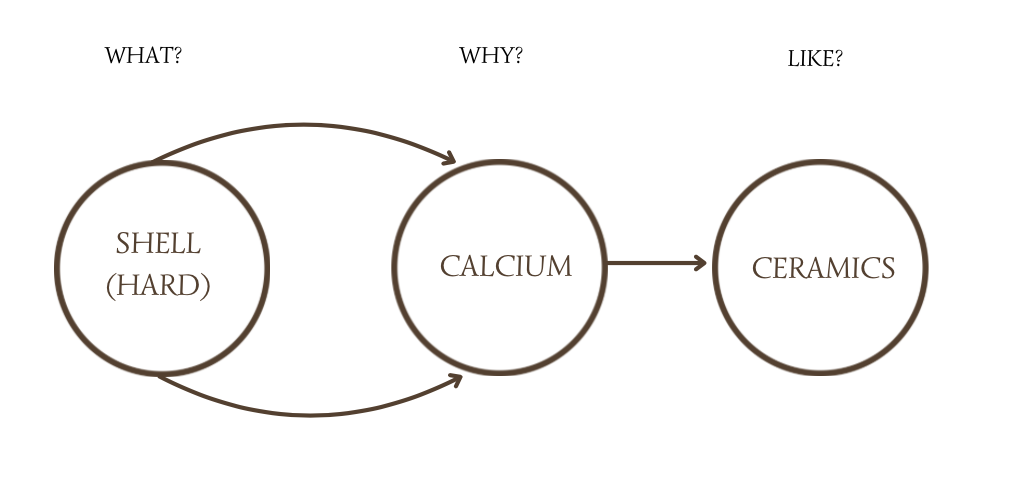
Fig 2. The Double W Framework
Fig 1. Video - In the lab
With a wide array of biomaterials available, keeping the material focus within a defined set of parameters was critical. In this project, we assessed each biomaterial alongside the metal properties such as malleability, hardness and flexibility.
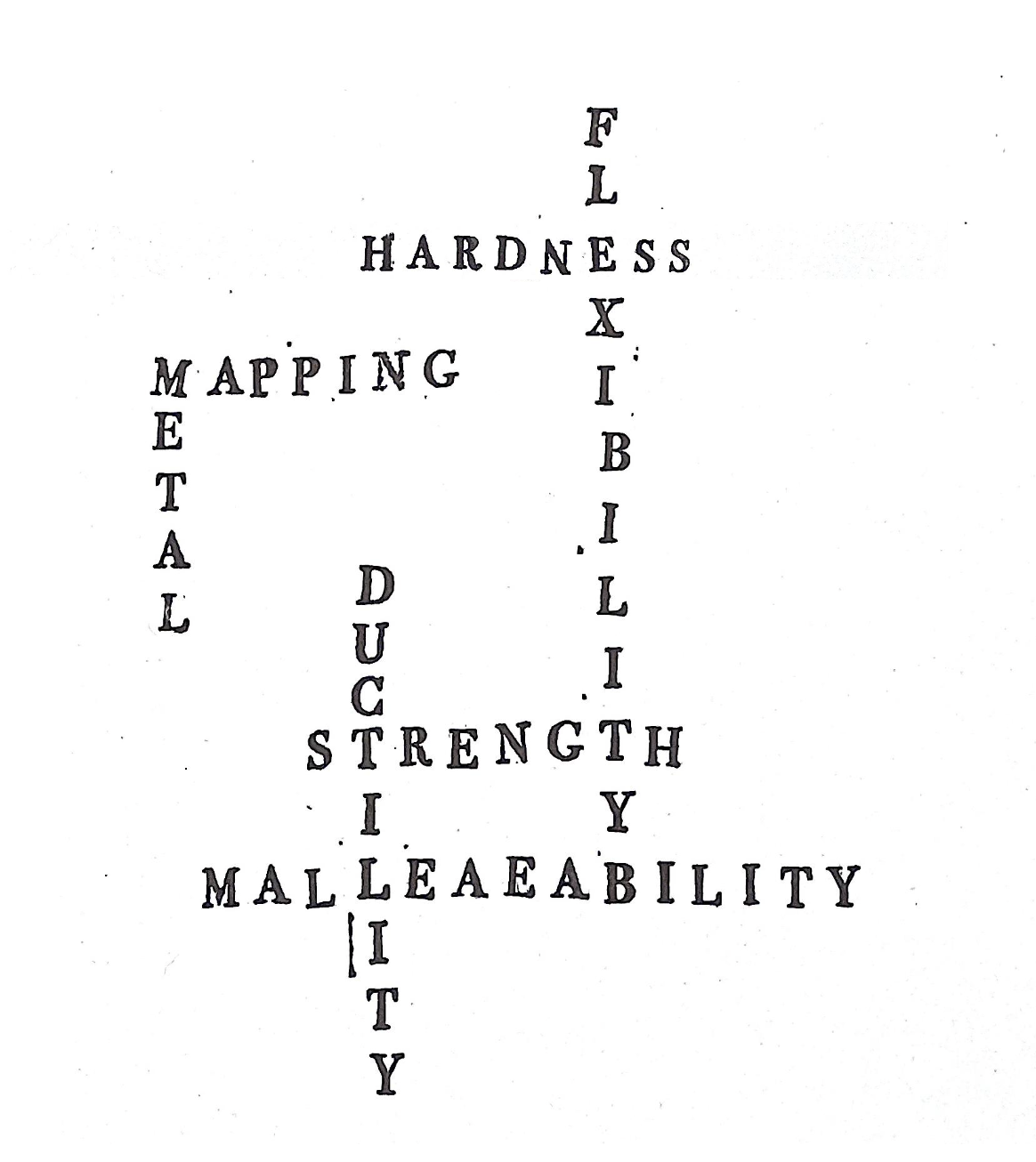
Fig 3. Mapping Metal Material Properties
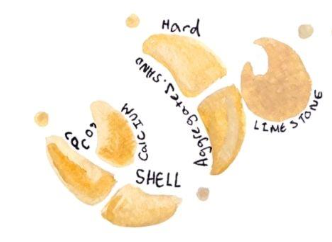
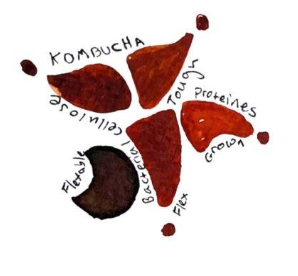
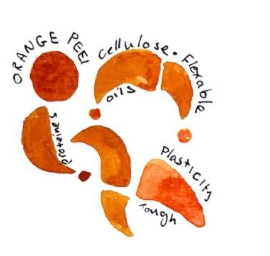
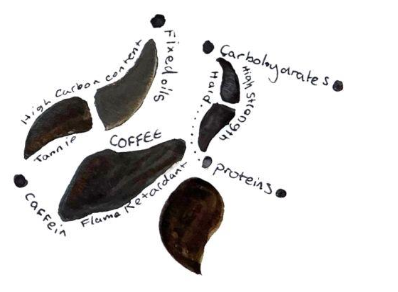
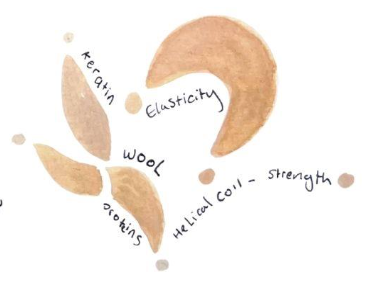
Fig 4. Mapping Bio Materials
The inspiration came from Beyond Meat burgers, which mimic meat texture and offer a middle ground for people considering vegetarian alternatives. This project applied the same idea by examining biomaterials with metal-like properties. Jewellers with long-standing practices in precious metals may be wary of biomaterials. However, biomaterials with similar or closely related properties could bridge this gap and create space for jewellers to consider and explore them in practice.
The project brings these ideas to life through visuals and prototypes. Positioned alongside the design research, the project highlights how these ideas and practices are plausible and possible options for future jewellers. It seeks to plant a seed for change, inspiring future jewellers to adopt biomaterials in their practice and shift from extractive to regenerative approaches.
Ultimately, Crafting Impermanence stimulates dialogue about biodesign's/ bio materials potential in jewellery. By utilising waste materials such as spent coffee grounds and wool waste, the project reimagines these resources as valuable adornments. It further demonstrates how craft and making can cultivate a deeper connection with, and understanding of, surrounding ecological systems. Serving as an initial exploration, the project encourages new approaches to designing with cultivated materials and living systems.
-
![]()
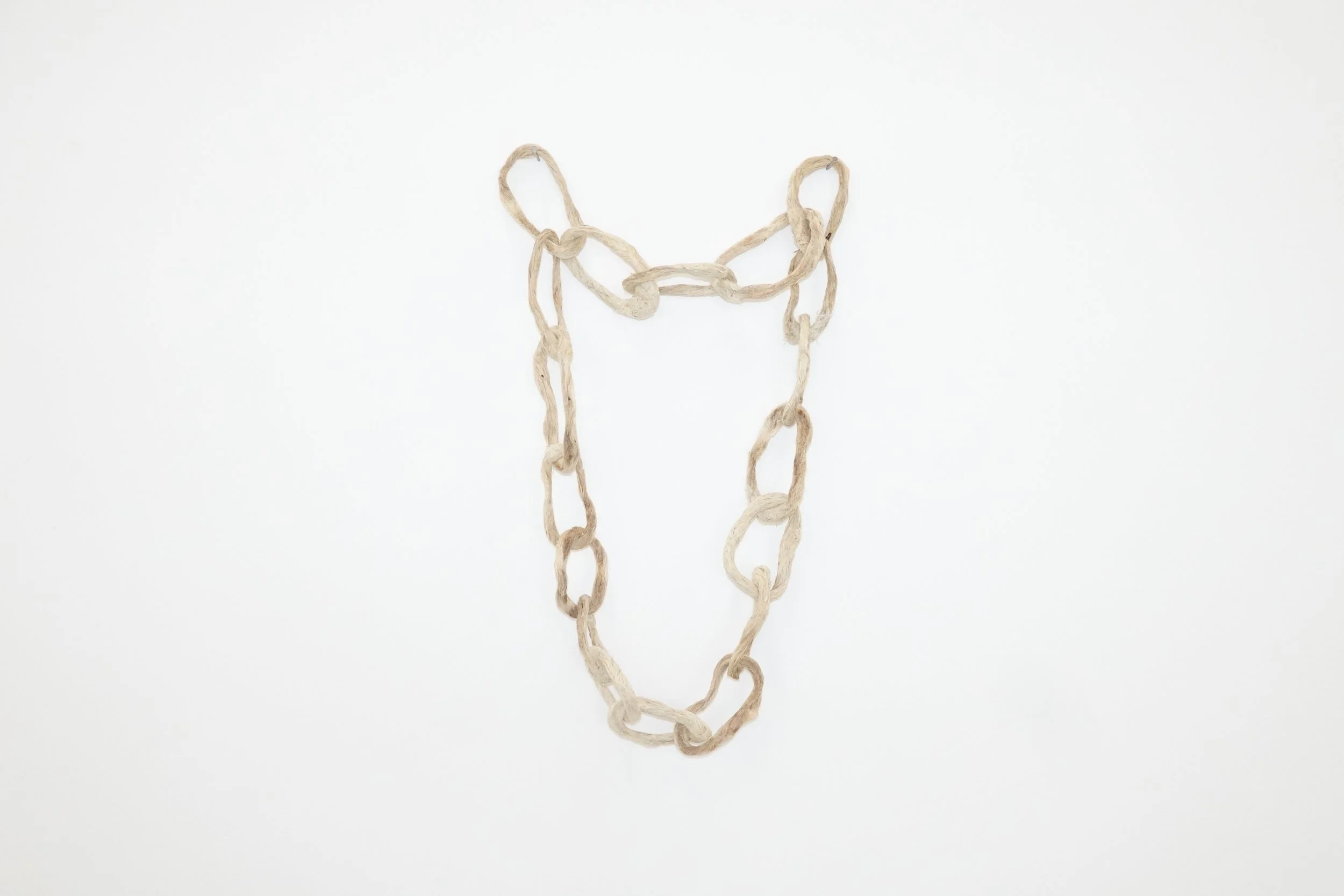
Links of Change. Wool Bio-material Necklace
-
![]()
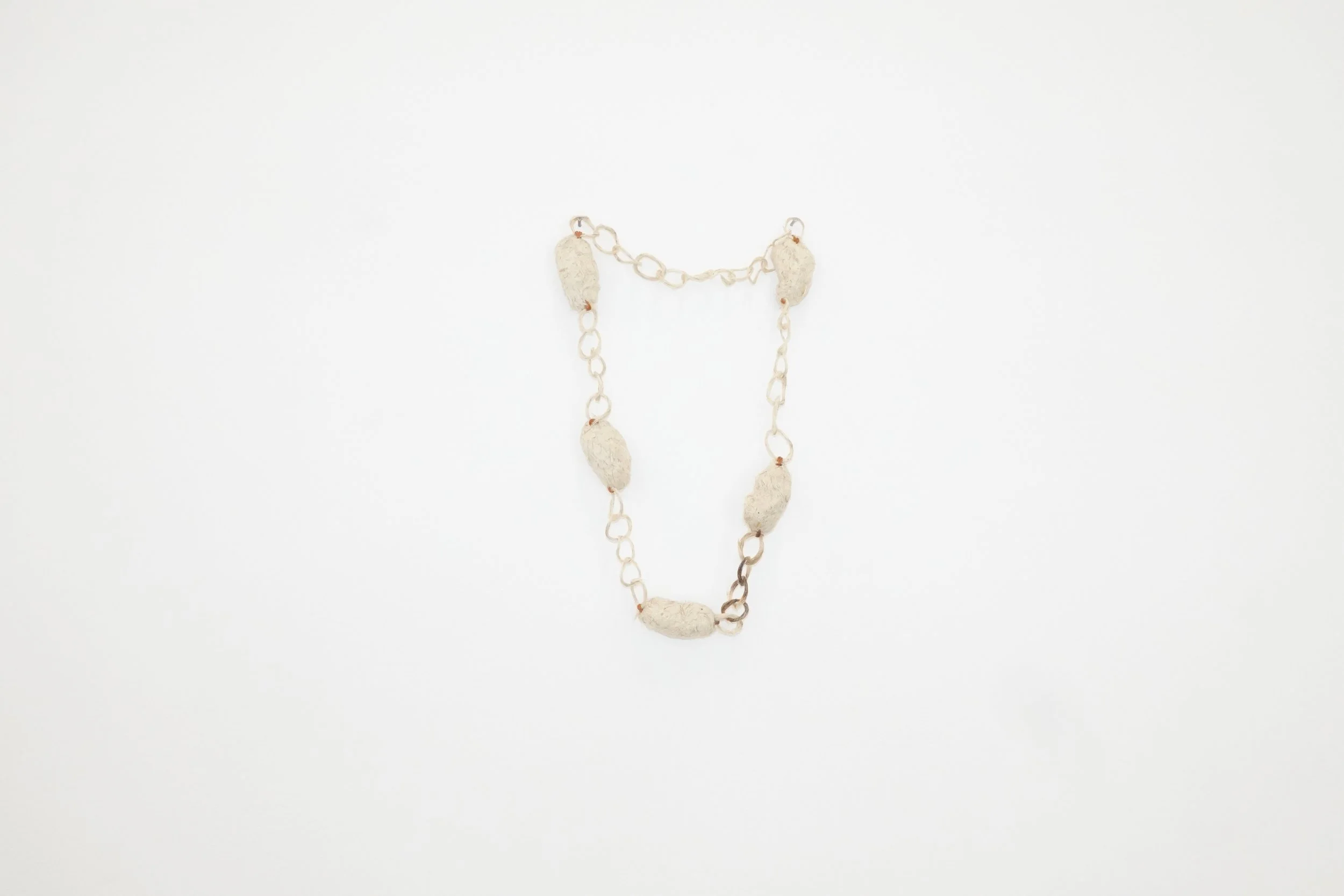
Nesting. Wool Bio-material Necklace
-
![]()
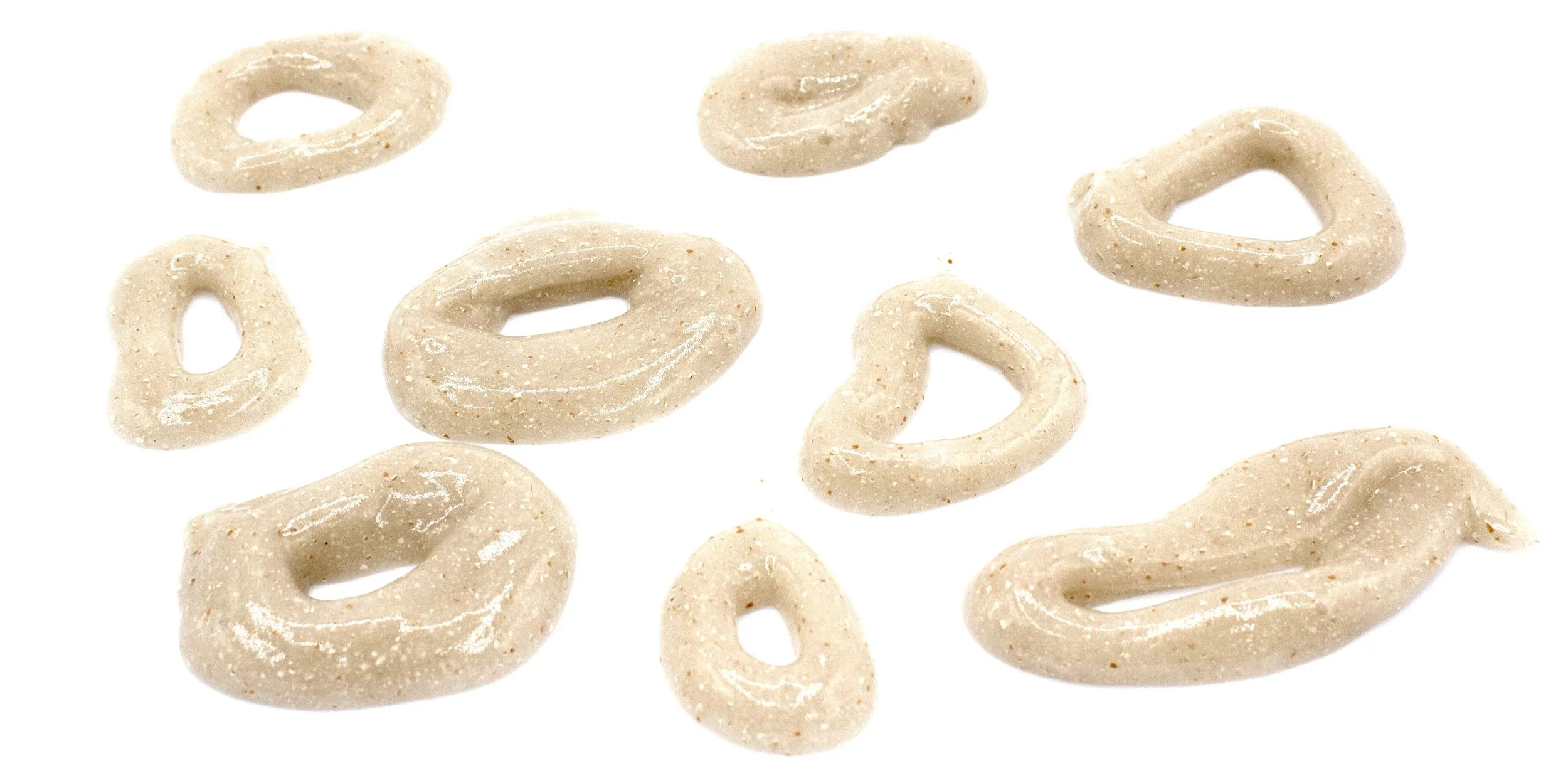
Egg shell bio-material links
-
![]()
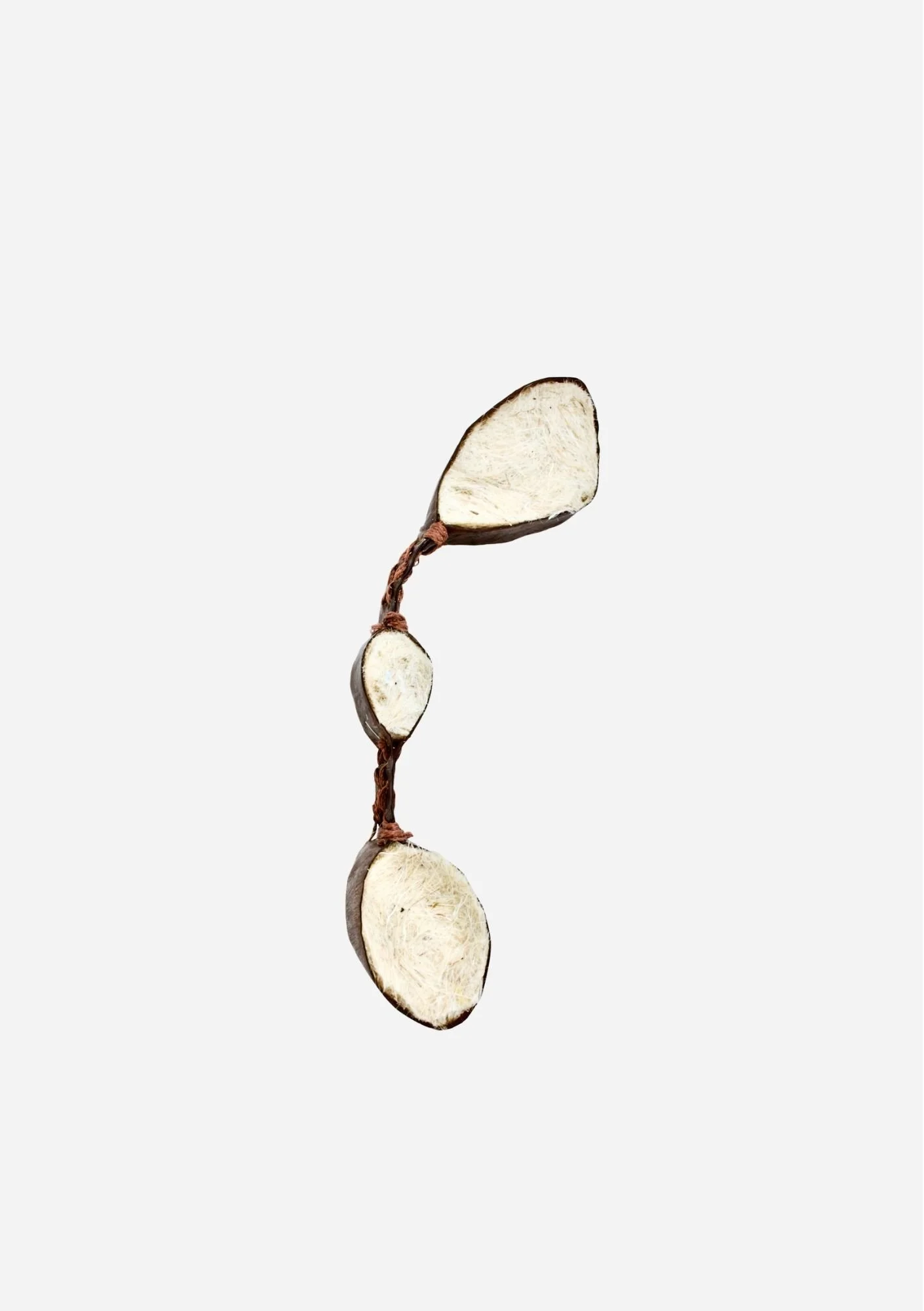
Kombucha Leather and wool bio-material object